Opervia
Product positioning translated into a bilingual website.
Bilingual AI solutions website and evaluation journey
Nov 2026 – Present · Dates per resume
Positioning · Information architecture · User journeys
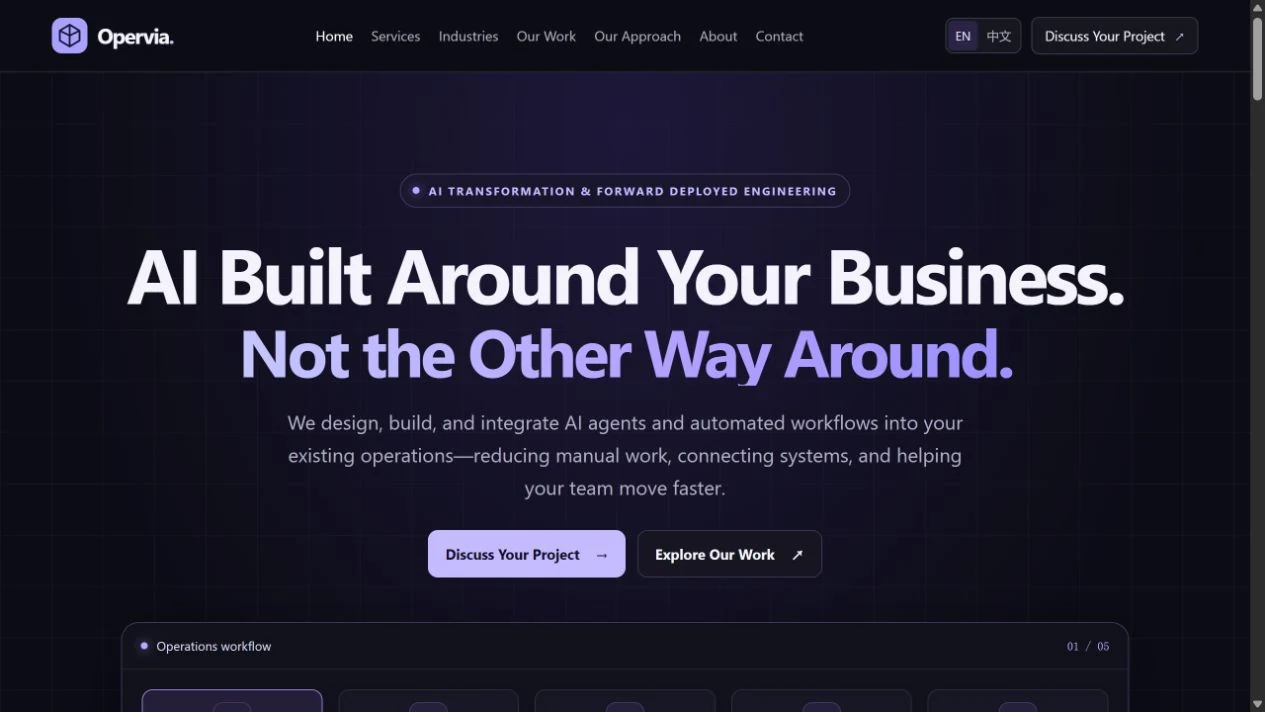
Completed product positioning and solution design, bilingual information architecture, services, use cases and approach pages, user journey and contact entry design.
Project completion and usability confirmed by the portfolio owner. Screenshots and recordings retain their original capture context.
Completed product positioning and solution design, bilingual information architecture, services, use cases and approach pages, user journey and contact entry design.
Completed and available for use.
Ongoing maintenance and improvements based on usage feedback.
What I Built
Completed product positioning and solution design, bilingual information architecture, services, use cases and approach pages, user journey and contact entry design.
How It Works
Positioning → information architecture → bilingual pages → project evaluation and contact path.
My Contribution
Positioning · Information architecture · User journeys
Technical Challenges
Clear solution scope, bilingual navigation and honest case labels.
Testing & Validation
Development included workflow testing, output review and troubleshooting.
Current Status
Completed · Ready to use
Evidence & implementation boundaries
Project completion and usability confirmed by the portfolio owner. Screenshots and recordings retain their original capture context.
The product is complete and usable, as confirmed by the portfolio owner. Responsibilities and dates follow the supplied resume; screenshots, recordings and logical diagrams illustrate the work.
Original resume project name: Opervia|企业 AI 自动化解决方案官方网站
Overview
Opervia turns AI solution positioning into a bilingual website that helps users understand use cases, delivery approach and the information needed for a solution discussion.
Completed product positioning and solution design, bilingual information architecture, services, use cases and approach pages, user journey and contact entry design.
Development included workflow testing, output review and troubleshooting.
Completed and available for use.
Ongoing maintenance and improvements based on usage feedback.
Problem
A business evaluating AI automation needs to connect an operational problem with a plausible solution and understand what to discuss next. Technical capability lists alone do not provide that path. Opervia turns product positioning into a structured website and evaluation journey.
My Role
I led product planning, positioning, information architecture and user-flow design, and used AI tools to help organize page content and development requirements.
Key Decisions
Organize around evaluation questions
Use page structure to answer what the solution is, where it applies, how it would be delivered and what information is needed next. This is solution design and information architecture, not evidence of conversion improvement.
Separate examples from delivery evidence
Clearly label illustrative examples and show the implementation with original product pages.
Keep the contact path honest
The existing site disables contact submission without a configured receiver. A visible form or polished page is not a completed delivery channel or proof of market validation.
Product Design
Connect positioning, services, use cases, project examples and approach pages into a path from understanding a problem to preparing a solution discussion. Use English and Chinese versions with equivalent meaning. The career portfolio remains focused on recruitment, separate from the historical business-site journey.
Inside the product
Supplied media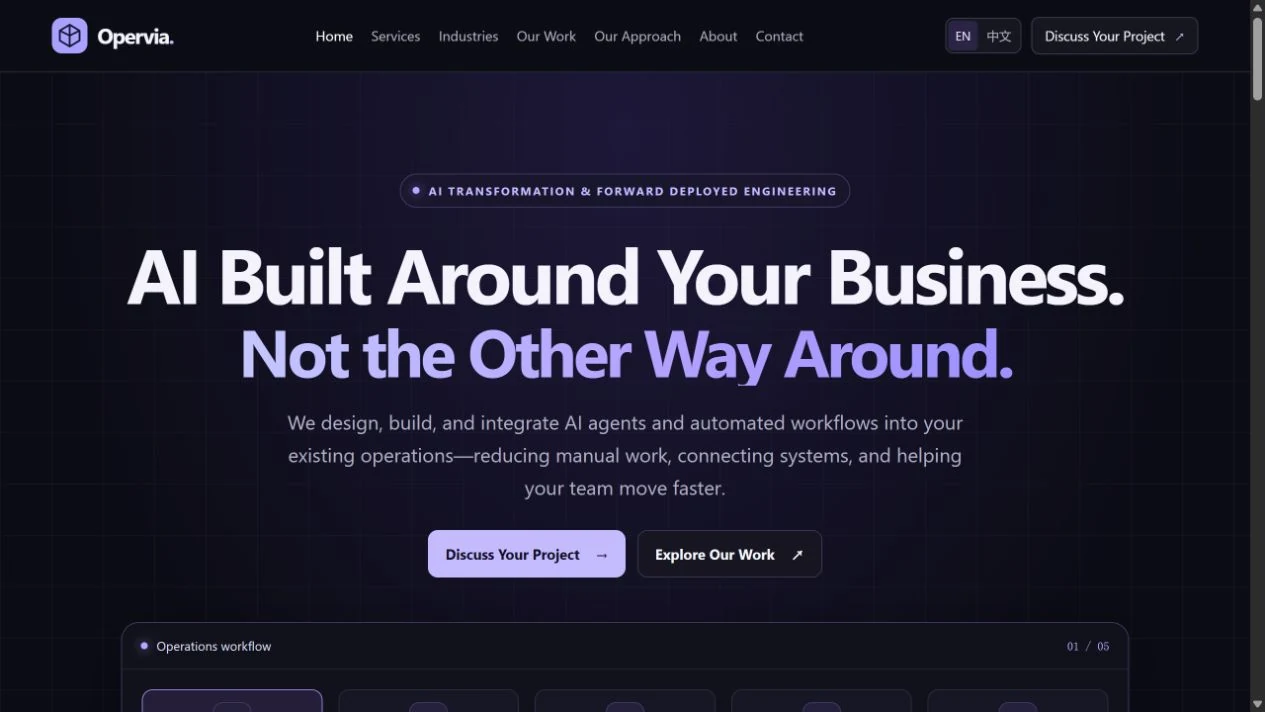
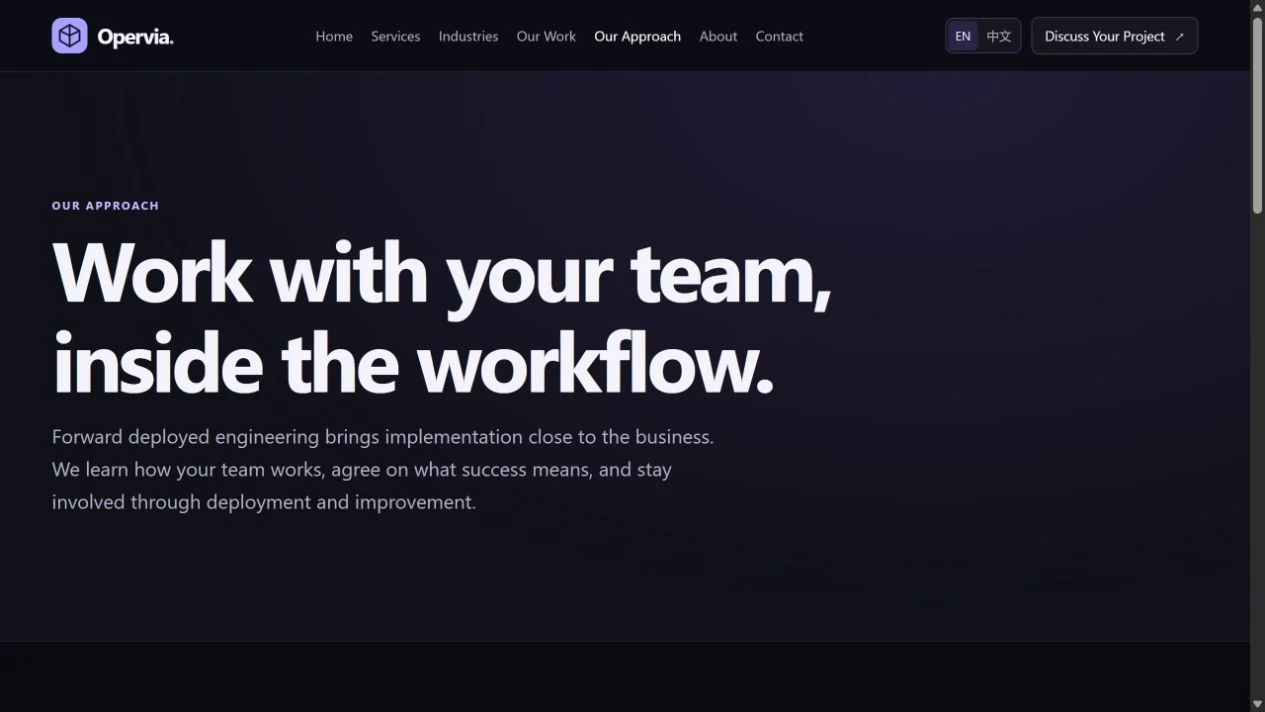
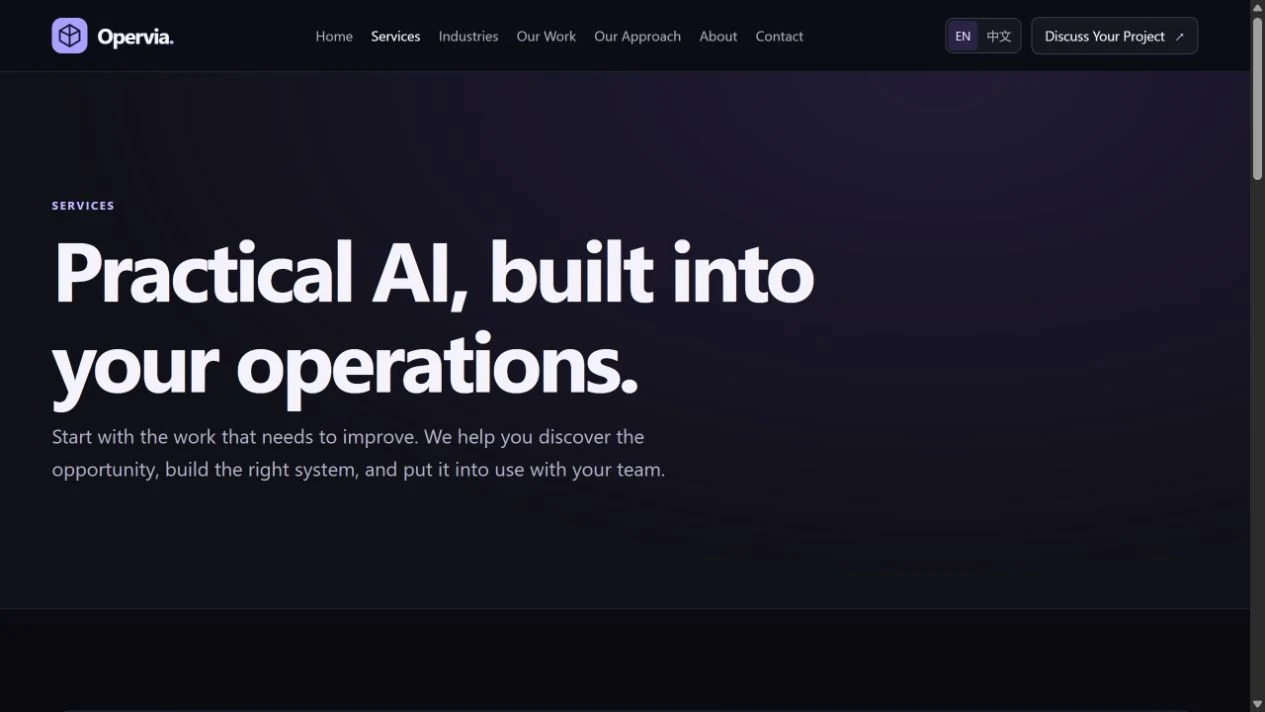
System Architecture
Information architecture: positioning leads to services and use cases, followed by project examples, approach and a contact path. The actual bilingual local build has seven page types. The diagram describes navigation and evaluation flow, not a deployed backend, CRM integration or accepted service platform.
- PositioningSystem workflow
- Services & use casesSystem workflow
- Project examplesSystem workflow
- ApproachSystem workflow
- Contact pathSystem workflow
Exact components, deployment boundaries and data flows await original project evidence. This diagram adds no delivery claims.
Tags describe project practice, not personal proficiency or certification.
Implementation
I translated the planned positioning and user journey into page structure and AI-assisted content and development requirements. The retained evidence includes the real Home, Services and Approach pages running from the existing production build.
Technical Challenges
The content must make technical ideas understandable without implying unsupported delivery capabilities. Bilingual navigation and consistent case labels help readers evaluate the offer, but whether the journey works for real users requires usability research, not a visual review alone.
Testing & Validation
Development included workflow testing, output review and troubleshooting.
Retained historical records are not newly executed original-product tests.Results
Completed product positioning and solution design, bilingual information architecture, services, use cases and approach pages, user journey and contact entry design. The product is complete and usable.
Project dates follow the supplied resume; screenshots and recordings document the product at the time of capture.
Product Demo
- Product positioning and solution design
- Bilingual information architecture
- Services, use cases and approach pages
- User journey and contact entry design
Reserved for the real thing.
An original recording has not been supplied. Concept previews are not presented as running software or delivery evidence.
Show the work in action.
Project completion and usability confirmed by the portfolio owner. Screenshots and recordings retain their original capture context.
- Actual website or approved prototype
- Page structure & user journeys
- Design exploration & revisions
Lessons Learned
A clear website can make a solution easier to inspect, but it cannot validate the service by itself. The next steps are to test whether users can locate a relevant use case, understand the delivery approach and complete a working contact path. These are proposed checks, not completed user-study findings.